← Back to
Seminars
The utricle: a microcosm of human balance
Emilia Luca, Sunnybrook Research Institute
Abstract
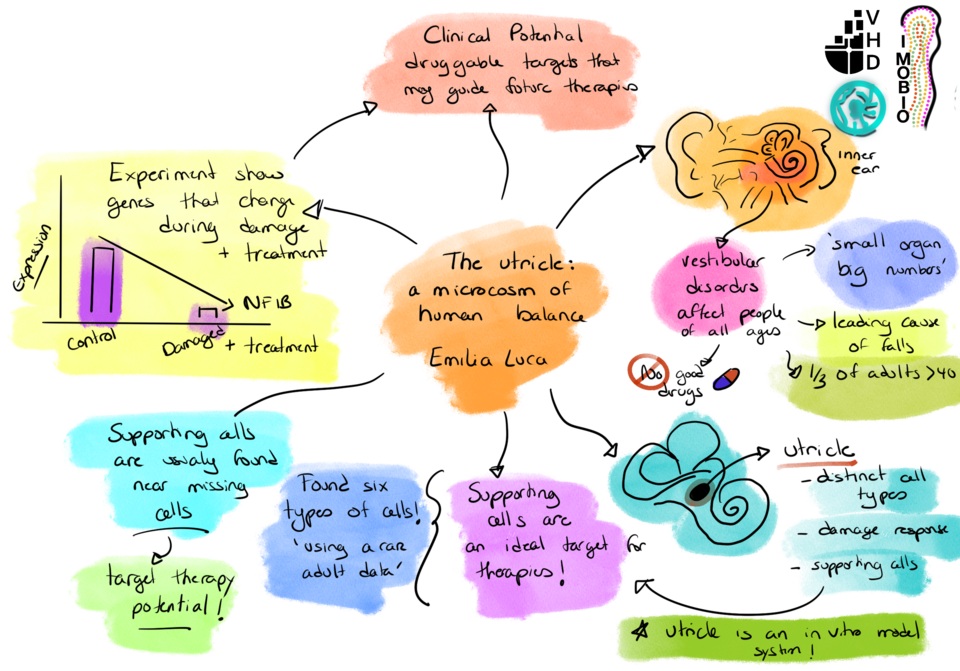
The human utricle is a vestibular sensory organ required for balance, a function that declines with age and currently lacks regenerative treatments. The utricle comprises interacting sensory and non-sensory cell populations, with non-sensory cells retaining limited regenerative potential.
We characterize the cellular and transcriptional landscape of the adult human utricle and its early response to ototoxic injury using bulk and single-cell RNA sequencing of patient-derived samples. We identify six transcriptionally distinct non-sensory cell types, including a previously uncharacterized supporting cell-like population, revealing cellular heterogeneity. Following aminoglycoside-induced damage, we detect rapid transcriptional changes within 24 hours in a subset of non-sensory cells, consistent with an early injury response and changes potentially relevant to regeneration.
These results provide a framework for modelling cell-state heterogeneity and early damage responses in the human vestibular system, with implications for regenerative strategies to restore balance.
Luca, E., Ibeh, N., Yamamoto, R. et al. Revealing heterogeneity and damage response in the adult human utricle . Nat Commun 17 , 9 (2026). DOI: 10.1038/s41467-025-66358-8 https://www.nature.com/articles/s41467-025-66358-8